


Journal · · 3 min read
Samina: the artist behind the house
A lifetime of painting, thread work and needlework, and the house that now carries her name into stone.
House of Samina takes its name from an artist. Samina (1971 to 2024) trained at the royal school founded by the Queen of Jaipur, in the Rajasthani, Mughal and floral traditions, and she made art for a lifetime, in every medium she could reach: paint on canvas and paper, thread and needlework, and tall urns of clay.
An exacting eye
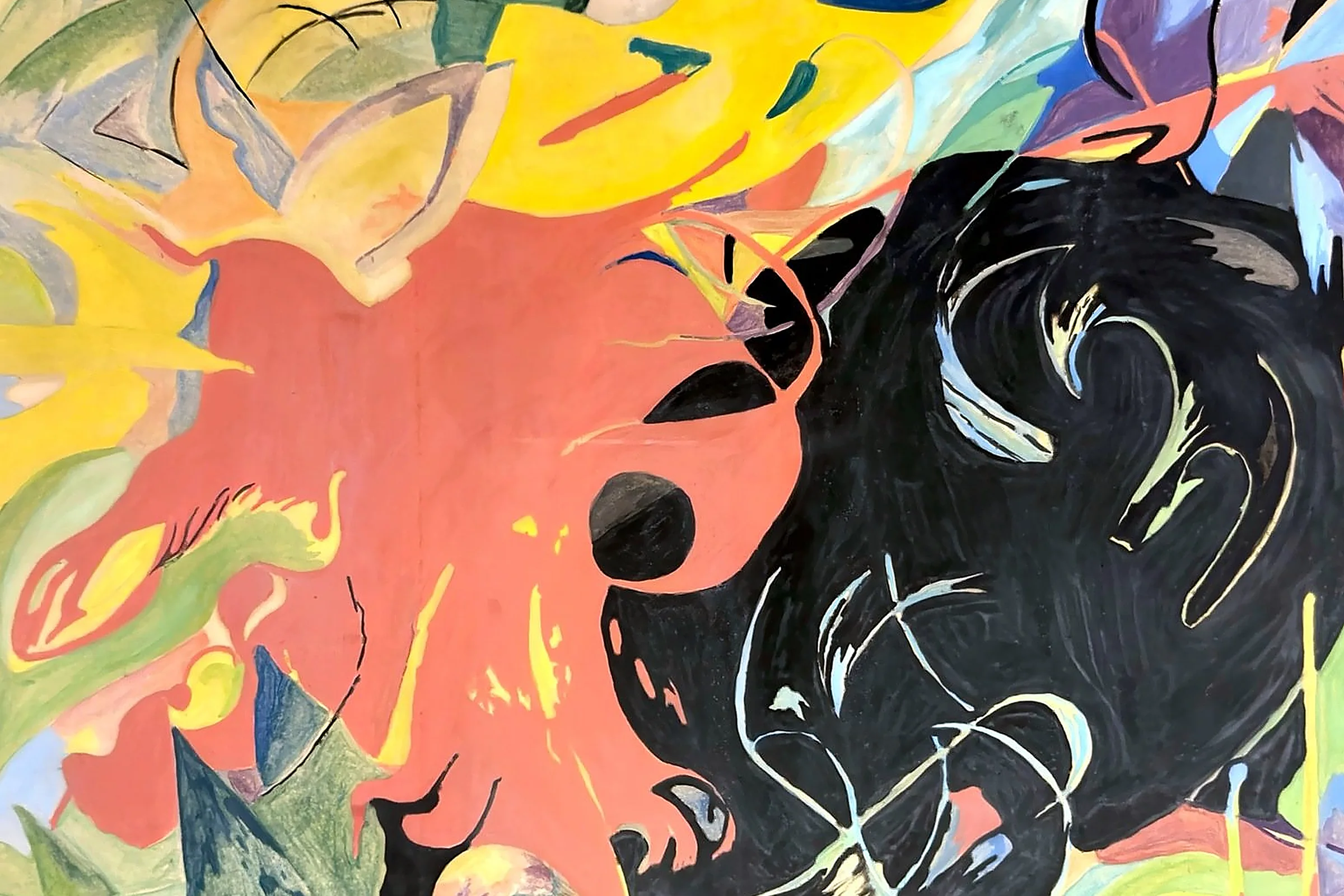
Hers was a restless, exacting eye. She studied the masters by copying them, among them a study after Franz Marc’s Fighting Forms, and moved freely between mediums: an oil painting of a caravan at dusk, a peacock worked in gold and silver thread, a harbour town stitched in needlepoint. An art society in Belgium invited her to show her work in Europe. Her works remain with her family, in private hands.
A family of stone
Her sons, Shazib Ali Gesawat and Adi Gesawat, grew up between her canvases and the family’s stone. Both have spent their working lives in the family’s quarries and workshops, the sixth generation of a family of marble craftsmen. When she passed in 2024, they gave her name to a house of its own.
Her paintings, in stone
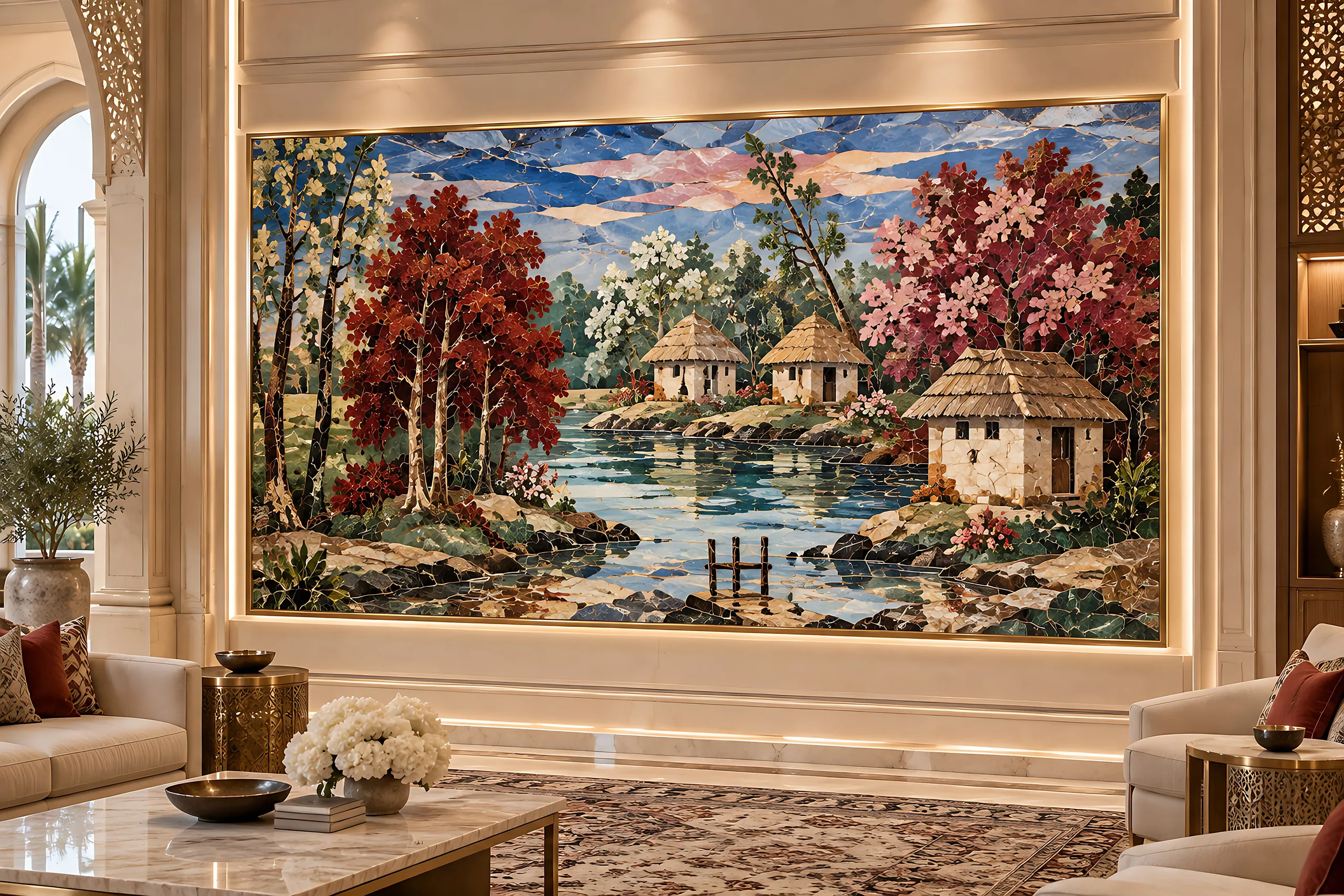
The Samina Collection brings her work into stone for the first time. Each painting is redrawn at full size, every colour matched to a natural stone or shell, and every piece cut and set by hand. Caravan becomes a wall of marble and jasper; the Peacock, worked in thread, becomes mother-of-pearl, lapis and gold-toned stone set into black marble.
What she left
She left more than paintings. She left a way of seeing: that a piece should be drawn for one place, made once, and made with care. That is the rule the house follows.